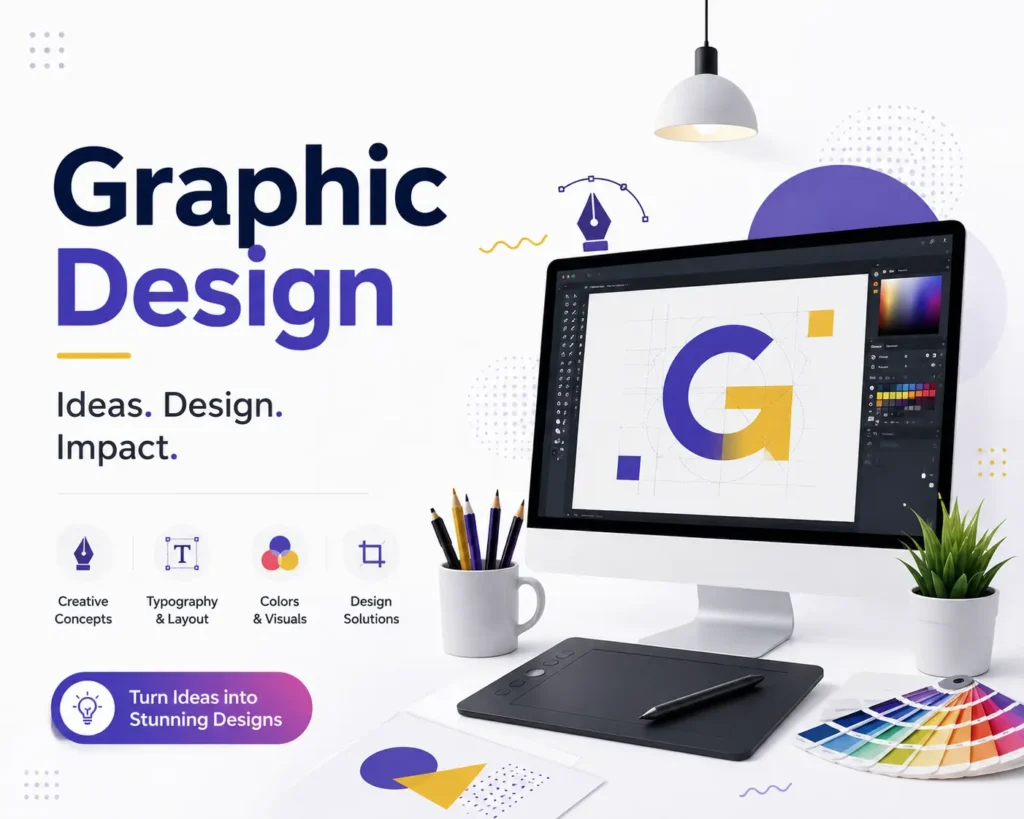
What is Graphic Design?
Graphic Design is one of the most creative and in-demand digital skills in today’s visual and technology-driven world.
Every business, brand, startup, and organization needs attractive visual content to communicate its message effectively.
It involves creating logos, social media posts, advertisements, brochures, posters, website graphics, product packaging, and other visual materials.
Graphic Designers use colors, typography, images, illustrations, and layouts to create designs that are both visually appealing and meaningful.
Learning Graphic Design opens the door to multiple career opportunities such as Graphic Designer, Brand Designer, Visual Designer, UI Designer, Social Media Designer, and Freelance Designer.
With the rapid growth of digital marketing, e-commerce, content creation, and online businesses, skilled Graphic Designers are in constant demand.
This skill not only helps individuals express their creativity but also enables them to build professional careers in various industries.
Mastering Graphic Design can lead to a stable, flexible, and future-ready career in the creative and digital economy.
TABLE OF CONTENTS
TogglePractical Use of Graphic Design?
Graphic Design is used in almost every industry to communicate ideas, promote products, and create a strong visual identity.
From business logos and product packaging to websites and social media posts, graphic design helps brands attract attention and connect with their audience.
Whether it is a small business, large corporation, educational institution, or content creator, graphic design plays an important role in presenting information in a clear and visually appealing way.
Real-Life Examples of Graphic Design
Some common examples of graphic design that we see every day include:
- Company logos and brand identities
- Social media posts and advertisements
- Product packaging and labels
- Business cards and brochures
- Website banners and graphics
- YouTube thumbnails and channel branding
- Posters, flyers, and event promotions
- Mobile app graphics and digital content
Types of Graphic Design
Graphic Design consists of several specialized areas, each serving different business and creative needs.
Brand & Logo Design
Brand and Logo Design focuses on creating a unique visual identity for businesses and organizations.
It includes designing logos, brand colors, typography, and visual guidelines that help a brand stand out and be recognized by customers.
Print Design
Print Design involves creating designs for physical materials such as brochures, magazines, books, posters, flyers, business cards, and product packaging.
Although digital media is growing rapidly, print design continues to be important in marketing and branding.
Digital / Social Media Design
Digital Design focuses on creating content for online platforms such as Facebook, Instagram, LinkedIn, YouTube, and websites.
This includes social media creatives, display ads, promotional banners, and marketing graphics used by businesses and content creators.
UI Graphic Design
UI (User Interface) Graphic Design involves designing the visual elements of websites, mobile applications, and software platforms.
The goal is to create attractive, user-friendly, and easy-to-navigate digital experiences.
Motion Graphics
Motion Graphics combines graphic design with animation to create moving visual content.
Examples include animated advertisements, explainer videos, social media animations, YouTube intros, and promotional videos.
Can Beginners Learn Graphic Design?
Yes, Graphic Design is a beginner-friendly skill that can be learned with consistent practice and creativity.
Students, professionals, freelancers, and business owners can start learning graphic design even without a design background.
With modern design tools, online courses, and practical projects, beginners can gradually develop the skills needed to create professional-quality designs.
Why Graphic Design is Important Today?
In today’s digital world, visual communication has become more important than ever.
Businesses need engaging designs to promote their products, build trust, and attract customers across websites, social media, and advertising platforms.
As online content continues to grow, graphic design helps brands stand out in a competitive market and communicate their message effectively.
This is why Graphic Design remains one of the most valuable and in-demand creative skills in the modern economy.
🎨 Graphic Design
Learn Graphic Design from beginner to advanced level and create professional logos, social media graphics, branding materials, and visual content for the digital world.
- ✔ Beginner to Advanced Level
- ✔ Photoshop, Illustrator & Canva
- ✔ Logo, Branding & Social Media Design
- ✔ High-demand Creative Skills
Why Graphic Design is a High-Demand Career?
Graphic Design has become one of the most sought-after creative skills in today’s digital economy.
As businesses increasingly rely on visual communication, the demand for skilled graphic designers continues to grow across industries.
Growing Demand for Visual Content
The internet is driven by visual content. Businesses, influencers, educational institutions, and organizations regularly create social media posts, advertisements, websites, videos, and promotional materials.
To capture attention and engage audiences, companies need professional designers who can create attractive and effective visual content.
Importance of Branding
A strong brand identity helps businesses build trust and stand out from competitors.
Graphic Designers play a key role in creating logos, brand colors, marketing materials, and visual elements that shape how customers perceive a brand.
As more businesses focus on branding and online presence, the need for skilled designers continues to increase.
Demand Across Multiple Industries
Graphic Design is not limited to advertising agencies or creative studios.
Industries such as digital marketing, e-commerce, education, media, entertainment, technology, healthcare, real estate, and corporate businesses all require graphic design services.
This wide range of opportunities makes Graphic Design a versatile and high-demand career option for creative individuals.
Skills Required for Graphic Design
To become a successful Graphic Designer, it is important to develop a combination of creative, technical, and visual communication skills.
While design software can help create professional designs, strong design fundamentals are what make a designer truly effective.
Creativity & Visual Thinking
Creativity is one of the most important skills in Graphic Design.
Graphic Designers need to think visually and come up with unique ideas that communicate messages clearly and attract attention.
Creative thinking helps designers solve problems and create designs that are both appealing and meaningful.
Typography
Typography is the art of selecting and arranging fonts effectively.
A Graphic Designer should understand how different fonts influence readability, branding, and visual communication.
Good typography helps make designs look professional and easy to understand.
Color Theory
Colors play a major role in design and influence how people feel and respond to visual content.
Understanding color theory helps designers choose the right color combinations to create attractive, balanced, and impactful designs.
It also helps maintain brand consistency and improve visual appeal.
Layout & Composition
Layout and composition refer to how text, images, and design elements are arranged within a design.
A well-structured layout improves readability, visual balance, and user experience.
Learning proper composition helps designers create clean, organized, and professional-looking designs.
Image Editing Skills
Graphic Designers often work with photographs, illustrations, and digital images.
Basic image editing skills help improve image quality, remove unwanted elements, adjust colors, and prepare visuals for different platforms.
These skills are essential for creating polished and professional design projects.
🎨 Graphic Design
Learn Graphic Design from beginner to advanced level and create professional logos, social media graphics, branding materials, and visual content for the digital world.
- ✔ Beginner to Advanced Level
- ✔ Photoshop, Illustrator & Canva
- ✔ Logo, Branding & Social Media Design
- ✔ High-demand Creative Skills
Course Duration for Graphic Design
The time required to learn Graphic Design depends on the type of course you choose and your career goals.
Students can start with short certification programs to learn the basics, pursue professional courses for practical industry skills, or opt for degree programs for a comprehensive understanding of design and visual communication.
Certification Courses (2–6 Months)
Certification courses are ideal for beginners who want to learn Graphic Design quickly and gain practical skills.
These courses usually cover design fundamentals, typography, color theory, logo design, social media graphics, and popular design software such as Adobe Photoshop, Illustrator, and Canva.
They are suitable for students, freelancers, and professionals looking to develop job-ready skills in a short period.
Professional Courses (6–12 Months)
Professional Graphic Design courses provide more in-depth training and hands-on experience.
In addition to design fundamentals, students learn branding, advertising design, digital marketing creatives, UI design basics, portfolio development, and real-world design projects.
These programs are designed to prepare learners for freelance work, internships, and entry-level graphic design roles.
Degree Programs (3–4 Years)
Degree programs offer comprehensive education in Graphic Design, Visual Communication, Multimedia Design, and related creative fields.
Students study design principles, branding, advertising, user experience, digital media, illustration, animation, and creative problem-solving.
These programs are suitable for individuals who want a strong academic foundation and wish to pursue long-term careers in the design, media, advertising, or creative industries.
Fees of Graphic Design Courses in India
The cost of learning Graphic Design varies depending on the course type, duration, institute, and learning mode.
Students can choose from free online resources, affordable online certifications, or professional diploma programs based on their learning goals and budget.
Free Courses (₹0)
Many platforms offer free Graphic Design courses that help beginners understand design fundamentals and basic design tools.
These courses are a good starting point for students who want to explore graphic design before investing in paid training.
Online Courses (₹2,000 – ₹30,000)
Online Graphic Design courses are popular because they provide flexible learning at an affordable cost.
These courses generally cover design principles, branding, typography, color theory, and popular design software used in the industry.
They are suitable for students, working professionals, freelancers, and anyone looking to build practical design skills.
Institutes & Diploma Programs (₹30K – ₹2L)
Professional institutes and diploma programs offer structured training with hands-on projects, portfolio development, and industry exposure.
These programs are designed for students who want in-depth learning and are planning to pursue Graphic Design as a full-time career.
The fees usually depend on the institute’s reputation, course duration, facilities, and placement support offered to students.
🎨 Graphic Design
Learn Graphic Design from beginner to advanced level and create professional logos, social media graphics, branding materials, and visual content for the digital world.
- ✔ Beginner to Advanced Level
- ✔ Photoshop, Illustrator & Canva
- ✔ Logo, Branding & Social Media Design
- ✔ High-demand Creative Skills
Salary in India (Real Data)
Graphic Design offers good earning potential, and salaries generally increase with experience, skills, portfolio quality, and specialization.
Beginner: ₹3–6 LPA
Freshers and entry-level Graphic Designers can typically earn between ₹3 lakh and ₹6 lakh per year.
At this stage, designers usually work on social media graphics, basic branding projects, marketing creatives, and digital content while building their portfolio and practical experience.
Mid-Level: ₹6–12 LPA
Graphic Designers with 3–6 years of experience can earn between ₹6 lakh and ₹12 lakh per year.
Professionals at this level often handle brand identity projects, marketing campaigns, website graphics, UI design, and client management responsibilities.
Expert: ₹12–20+ LPA
Senior Graphic Designers, Art Directors, Brand Designers, and Creative Leads can earn ₹12 lakh to ₹20 lakh or more annually.
Their role typically involves leading design teams, managing major branding projects, developing creative strategies, and working with large companies or agencies.
Freelancers: ₹20K–₹2L+/Month
Freelance Graphic Designers have flexible earning opportunities based on their skills, experience, client base, and project volume.
Beginners may earn around ₹20,000–₹50,000 per month, while experienced freelancers working with multiple clients can earn ₹1 lakh to ₹2 lakh or more per month.
With a strong portfolio and specialized skills, graphic design can become a rewarding and scalable career path in both employment and freelancing.
Career Opportunities in Graphic Design
Graphic Design offers a wide range of career opportunities across creative, marketing, media, technology, and business sectors.
As businesses increasingly rely on visual content for branding and communication, the demand for skilled graphic designers continues to grow.
Students can choose to work in companies, design agencies, startups, media organizations, or build their own freelance careers.
Graphic Designer
Graphic Designers create visual content for businesses, brands, advertisements, websites, and marketing campaigns.
They work on logos, brochures, social media posts, banners, presentations, and other creative materials.
Brand Designer
Brand Designers focus on building a company’s visual identity.
They create logos, color palettes, typography guidelines, and branding elements that help businesses establish a professional and memorable image.
Social Media Designer
Social Media Designers create engaging graphics for platforms such as Instagram, Facebook, LinkedIn, YouTube, and X.
Their designs help businesses attract attention, increase engagement, and strengthen their online presence.
Packaging Designer
Packaging Designers create attractive product packaging that helps products stand out in the market.
They work on labels, boxes, wrappers, and packaging concepts for industries such as food, cosmetics, electronics, and retail.
UI Graphic Designer
UI Graphic Designers design the visual interface of websites, mobile apps, and software applications.
Their goal is to create visually appealing and user-friendly digital experiences.
Freelancer
Many graphic designers choose to work independently as freelancers.
Freelancers can provide design services to clients worldwide through personal networks, agencies, and online freelance platforms.
This career path offers flexibility, creative freedom, and the opportunity to work on a variety of projects.
Freelance Income Potential
Freelance Graphic Designers can earn anywhere between ₹20,000 and ₹2,00,000+ per month, depending on their skills, experience, portfolio, client base, and project quality.
As expertise grows, freelancers often have the potential to earn significantly more by working with high-value clients and international projects.
🎨 Graphic Design
Learn Graphic Design from beginner to advanced level and create professional logos, social media graphics, branding materials, and visual content for the digital world.
- ✔ Beginner to Advanced Level
- ✔ Photoshop, Illustrator & Canva
- ✔ Logo, Branding & Social Media Design
- ✔ High-demand Creative Skills
Who Should Choose Graphic Design?
Graphic Design is a suitable skill and career option for individuals who enjoy creativity, visual communication, and digital technology.
It offers opportunities across multiple industries and can be learned by students, graduates, freelancers, and working professionals.
Students After 10th & 12th
Students who have an interest in art, creativity, computers, and visual content can start learning Graphic Design after 10th or 12th.
It can help build valuable creative skills and open pathways to various career opportunities in the digital and design industry.
Creative Individuals
People who enjoy creating designs, experimenting with colors, working with images, and expressing ideas visually often find Graphic Design to be a rewarding field.
It allows creative individuals to turn their imagination into professional work.
Graduates
Graduates from any stream who want to enter the creative and digital industry can learn Graphic Design and develop a career in branding, advertising, marketing, media, and digital content creation.
Many companies actively hire skilled designers regardless of their academic background.
Freelancers & Content Creators
Graphic Design is an excellent skill for freelancers, YouTubers, bloggers, social media managers, and content creators.
It helps them create professional visual content, build a personal brand, attract audiences, and generate income through freelance projects and online opportunities.
Free vs Paid Courses (Which is Better?)
Both free and paid Graphic Design courses have their advantages, and the right choice depends on your learning goals.
If you are completely new to Graphic Design, free courses can help you understand the basics and explore whether the field interests you.
However, if your goal is to build professional skills and prepare for freelance or job opportunities, a structured paid course may offer more practical learning and guidance.
Free Courses → Basic Understanding
Free courses are ideal for beginners who want to learn the fundamentals of Graphic Design without any financial investment.
They usually cover basic topics such as design principles, color theory, typography, and an introduction to popular design tools.
Free courses can help students explore the field and build a strong foundation before investing in advanced training.
Paid Courses → Practical + Job-Ready
Paid courses are generally more structured and focused on practical skill development.
They often include real-world projects, portfolio building, mentorship, assignments, certifications, and industry-oriented training.
For students who want to pursue Graphic Design professionally, paid courses can provide a more comprehensive learning experience and help them become job-ready or freelance-ready faster.
Tools You Will Learn
Graphic Designers use a variety of professional tools to create logos, marketing materials, social media graphics, illustrations, and digital content.
Learning these tools helps designers work efficiently and create high-quality visual designs.
Adobe Photoshop
Adobe Photoshop is one of the most widely used graphic design and photo editing software in the world.
It is commonly used for image editing, photo manipulation, social media graphics, banners, posters, and digital artwork. Photoshop is considered an essential tool for most graphic designers.
Adobe Illustrator
Adobe Illustrator is a professional vector design software used for creating logos, icons, illustrations, and branding materials.
Unlike regular images, vector designs can be resized without losing quality, making Illustrator a preferred tool for logo and brand designers.
Canva
Canva is a beginner-friendly design platform that allows users to create professional-looking graphics quickly and easily.
It is widely used for social media posts, presentations, marketing materials, certificates, and promotional content.
Canva is an excellent starting point for beginners entering the world of graphic design.
Figma
Figma is a modern design tool used primarily for UI (User Interface) design and collaborative design projects.
It helps designers create website layouts, mobile app interfaces, wireframes, and prototypes while allowing teams to work together in real time.
CorelDRAW
CorelDRAW is a popular vector graphic design software widely used for logo design, print design, signage, packaging, and promotional materials.
Many printing and advertising companies use CorelDRAW because of its powerful design features and precision in creating professional graphics.
Learning these tools can help aspiring graphic designers build practical skills and prepare for a wide range of creative and professional design opportunities.
Portfolio & Certifications
A strong portfolio and relevant certifications can significantly improve your chances of getting freelance projects, internships, and full-time design jobs.
While certifications help validate your skills, a portfolio showcases your actual design abilities and creativity to potential clients and employers.
Why Portfolio Matters
A portfolio is a collection of your best design work that demonstrates your skills, creativity, and design thinking.
In the graphic design industry, employers and clients often give more importance to a designer’s portfolio than academic qualifications alone.
A well-organized portfolio can include logo designs, social media creatives, posters, branding projects, UI designs, and other creative work that reflects your capabilities.
Building a strong portfolio is one of the most important steps for anyone pursuing a career in Graphic Design.
Adobe Certified Professional
Adobe Certified Professional is a globally recognized certification that validates your skills in Adobe Creative Cloud applications such as Photoshop, Illustrator, and InDesign.
This certification demonstrates your ability to use industry-standard design tools and can add credibility to your professional profile.
It is particularly useful for students and aspiring designers who want to showcase their proficiency in professional graphic design software.
Canva Design School Certificate
Canva Design School offers beginner-friendly courses and certificates that help learners understand the fundamentals of graphic design, branding, visual communication, and content creation.
These certificates can be a good starting point for beginners who want to build practical design skills using Canva’s easy-to-use platform.
While a Canva certificate alone may not guarantee a job, the skills learned through these courses can help learners create professional-looking designs and strengthen their portfolios.
Final Verdict
Graphic Design is a creative, practical, and future-focused skill that offers opportunities across multiple industries.
Whether you want to work for a company, join a design agency, become a freelancer, or build your own brand, graphic design provides flexible career options with continuous learning and growth.
Success in this field depends on creativity, consistency, skill development, and building a strong portfolio rather than just earning a degree.
For students who enjoy visual creativity, design, branding, and digital content creation, Graphic Design can be a rewarding and exciting career path.
Is Graphic Design a Good Career in 2026?
Yes, Graphic Design continues to be a promising career choice in 2026.
With the rapid growth of digital marketing, social media, e-commerce, content creation, startups, and online businesses, the demand for skilled graphic designers remains strong.
Companies need professionals who can create engaging visual content, build brand identity, and improve customer communication across digital platforms.
In addition, freelancing, remote work, and global opportunities have made it easier for designers to work with clients from different industries and countries.
Students who continuously improve their design skills, stay updated with industry trends, and build a strong portfolio can create a successful and future-ready career in Graphic Design.
🎨 Graphic Design
Learn Graphic Design from beginner to advanced level and create professional logos, social media graphics, branding materials, and visual content for the digital world.
- ✔ Beginner to Advanced Level
- ✔ Photoshop, Illustrator & Canva
- ✔ Logo, Branding & Social Media Design
- ✔ High-demand Creative Skills